

English at Monkfield Park
At Monkfield Park, English is at the heart of our curriculum. From pre-school to Year 6, we want every child to become a confident communicator, an enthusiastic reader and a capable writer. We believe that language opens doors, and we are committed to giving all pupils the knowledge, skills and opportunities they need to succeed.
Our English curriculum is ambitious, inclusive and carefully planned to help children build strong foundations from the earliest years. We nurture a love of stories, poetry and information texts, while ensuring that children develop the reading, writing and speaking skills they need to thrive. Through high-quality teaching and a rich language environment, we want all pupils to leave Monkfield Park as articulate, literate and enthusiastic learners, ready for the next stage of their education and beyond.
Key Aims
Our English curriculum aims to:
- Develop pupils’ oracy, ensuring they can communicate clearly, confidently and respectfully in a range of contexts
- Teach early reading systematically through Read Write Inc. Phonics (RWI) so that children quickly gain the decoding skills needed to become fluent readers
- Foster secure reading habits through Accelerated Reader from Years 2 to 6, supporting pupils to read widely, independently and at an appropriate level
- Promote reading fluency through guided reading in Years 2 to 6, enabling pupils to read with pace, accuracy, expression and understanding
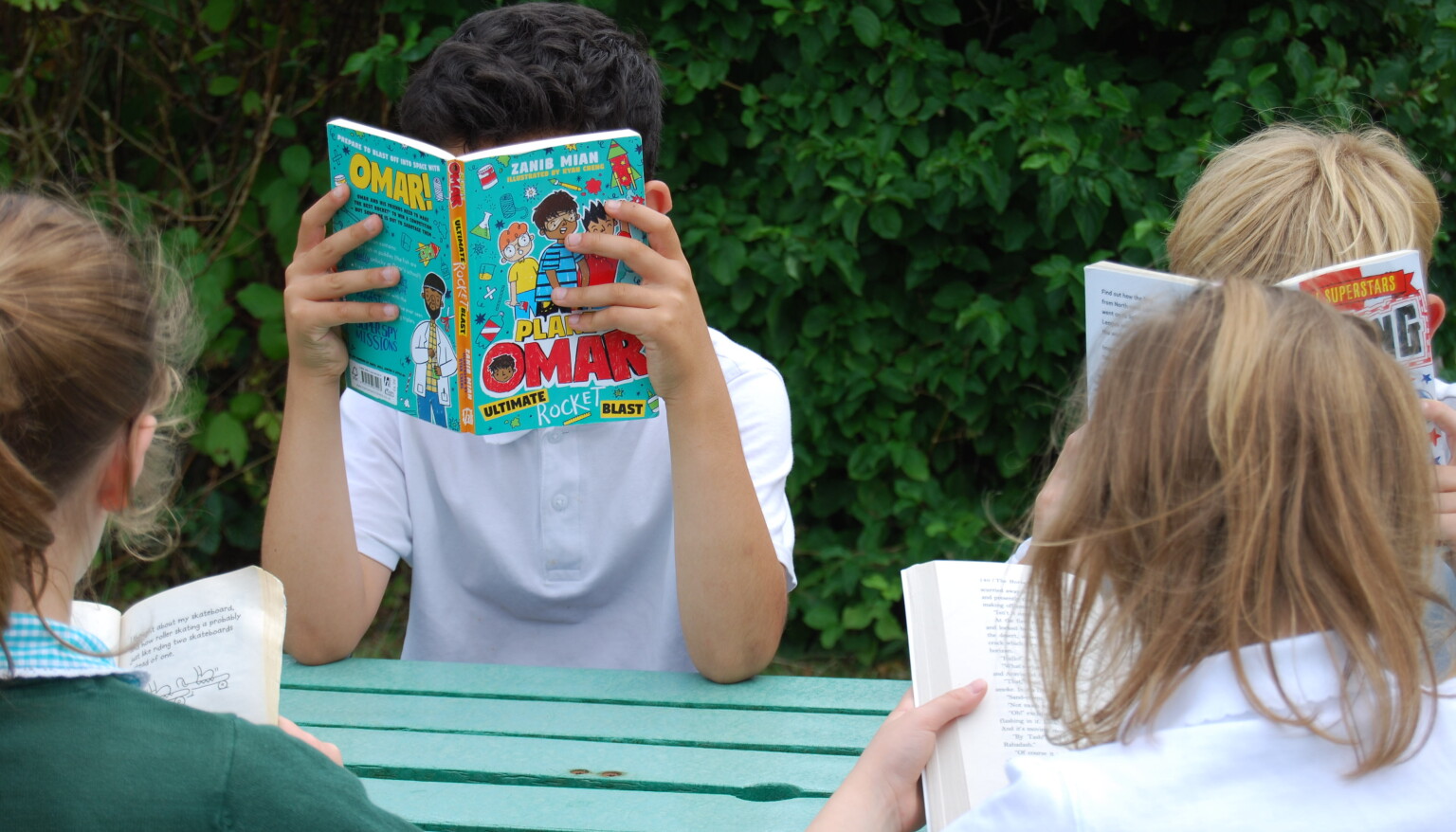
- Instil a strong culture of reading for pleasure, so that children value books, authors and stories as part of their daily lives
- Ensure children acquire the spelling, grammar, punctuation and handwriting skills needed to write accurately and effectively
- Develop pupils’ ability to write for a range of purposes, audiences and genres across the curriculum
- Build vocabulary and language comprehension so that pupils can express increasingly sophisticated ideas
- Support all learners to make sustained progress, including those with additional needs and those working at greater depth
Content and Skills
Our English curriculum is carefully structured to ensure that content knowledge and key skills are taught progressively across all phases.
In the early years, children are immersed in rich talk, songs, stories and rhymes. They are given abundant opportunities to develop listening, speaking and vocabulary skills through purposeful play, quality texts and adult modelling. Early phonological awareness is developed alongside a love of books, storytelling and mark-making.
In Key Stage 1, pupils build secure foundations in phonics through RWI, enabling them to decode with accuracy and confidence. They are taught to read and spell common exception words, develop fluency, and begin to understand simple texts in greater depth in daily English lessons. Writing is carefully linked to reading and oral composition, with pupils learning to write sentences that are grammatically correct, well-punctuated and purposeful.
In Years 2 to 6, pupils continue to develop as readers through a combination of Accelerated Reader, guided reading for fluency, and high-quality class texts. Reading lessons focus on fluency, vocabulary, inference, retrieval, explanation and evaluation, ensuring children become thoughtful and analytical readers. Pupils are regularly exposed to a wide range of genres, authors and text types, including poetry, non-fiction and classic and contemporary literature.
Writing is taught through high-quality texts and clear modelling. Our writing curriculum follows a three-phase approach:
- Immersion and familiarisation in the text type
- Capturing ideas and oral rehearsal
- Modelled, shared and then independent writing followed by editing
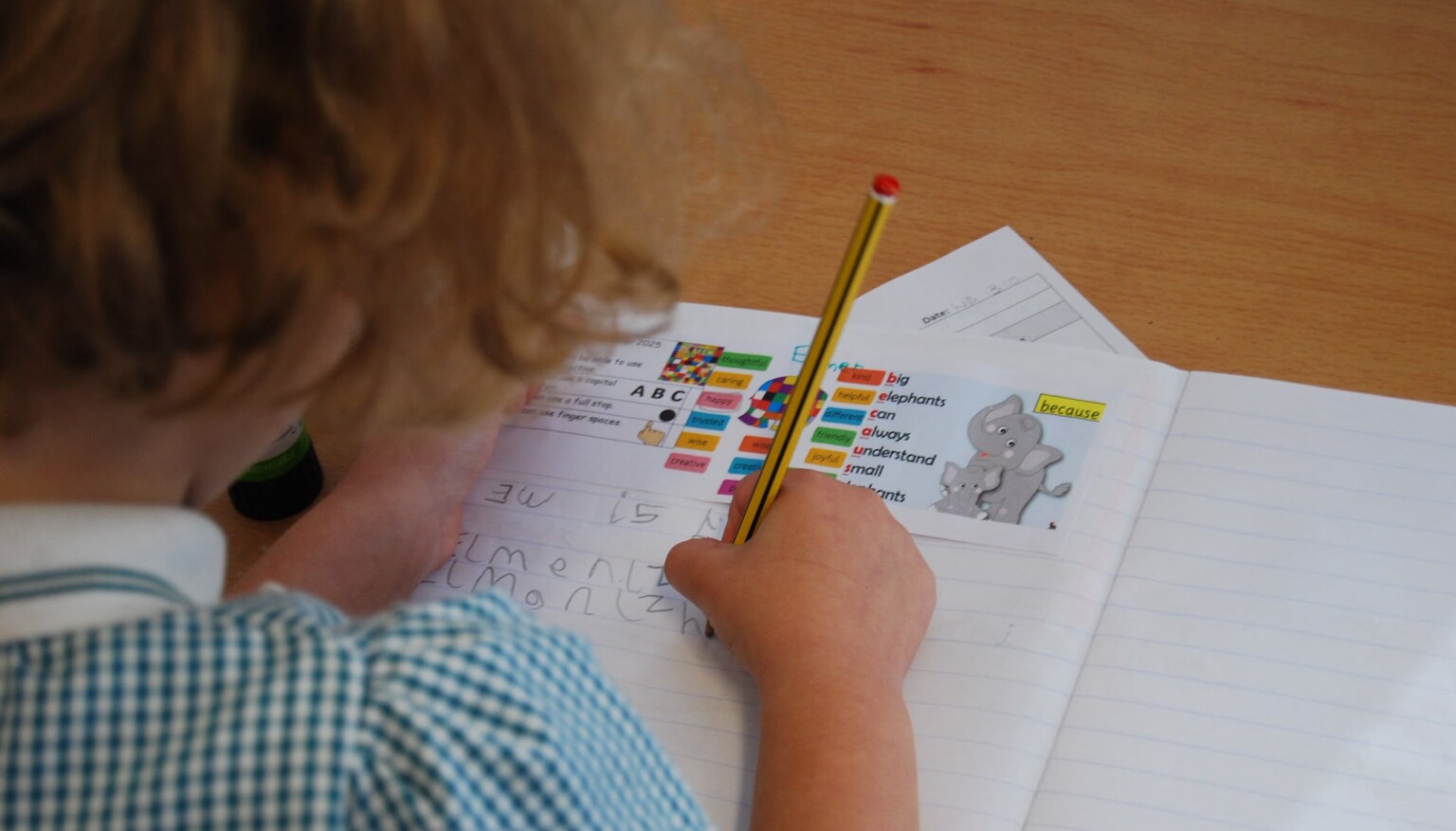
This approach helps children understand the features and purpose of different text types, develop their ideas through spoken language, and build confidence before writing independently. Children learn how to plan, draft, edit and improve their work, building independence over time. Grammar, punctuation and spelling are taught both explicitly and in context, so that pupils can apply their skills confidently in their own writing.
We place a strong emphasis on vocabulary development throughout the curriculum. Children are taught ambitious words, encouraged to explore language choices, and supported to understand how vocabulary shapes meaning and effect.
Progression
Progression in English is carefully designed so that pupils build knowledge and skills securely over time.
- In pre-school and early years, children begin by developing listening, speaking, early comprehension, phonological awareness and an enjoyment of stories and rhymes
- In Key Stage 1, pupils move from oral language and phonics into confident decoding, sentence construction and basic composition
- In Lower Key Stage 2, pupils read with increasing fluency and understanding, write with greater cohesion, and begin to use a wider range of grammar and punctuation accurately
- In Upper Key Stage 2, pupils refine their reading comprehension, writing style and independent editing, producing work that is coherent, controlled and adapted for purpose and audience
Progression is supported through systematic teaching, regular assessment and timely intervention. Pupils who need additional support receive targeted teaching to ensure that they keep up, whilst those who grasp concepts quickly are challenged to deepen and extend their learning. We are committed to ensuring that every child makes strong progress from their individual starting point.
Wider Impact
A strong English curriculum has a lasting impact on children’s lives. It helps them to communicate effectively, think critically and develop empathy and imagination. It also supports success in every other subject, as reading, writing and talk are essential to learning.
Through English, our children learn to be tolerant and respectful, confident and responsible, and to try their best in everything they do. They develop the habits and attitudes that will help them to succeed not only in school, but in life. By the time pupils leave our school, we want them to be:
- confident readers
- thoughtful writers
- articulate speakers
- curious learners
- ready for the opportunities ahead
We believe that English opens doors. Through high expectations, inspiring texts and a strong culture of communication, reading and writing, we aim to give all pupils the very best start in life.